
Moving the World'sEnergy. Every Day.
From deep-water ocean tankers and inland waterway barges to dedicated rail spur connections, AllTrans Terminals moves bulk liquid commodities across the Gulf Coast, the nation, and the globe — with the precision, safety, and reliability the energy industry demands.
by Petroleum
Export Volume

Gateway to the World's Energy Markets
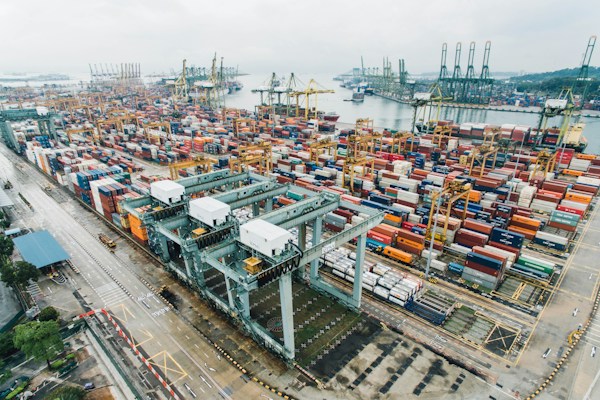
AllTrans Terminals sits at the center of the most important energy logistics hub in the Western Hemisphere — the Port of Houston.
Handling more foreign petroleum cargo than any other port in the United States, the Port of Houston is the gateway through which American energy reaches the world — and through which imported crude, chemical feedstocks, and specialty products flow into the domestic supply chain. AllTrans Terminals is positioned at the heart of this activity, with deep-water berths, comprehensive vessel-handling capabilities, and the experience to manage the full spectrum of bulk liquid shipping movements.
Whether you are loading an Aframax tanker bound for Europe, receiving a barge from an upstream refinery on the Mississippi River system, or transloading a rail car delivery into marine export, AllTrans Terminals provides the infrastructure, expertise, and round-the-clock operations to make it happen safely, on schedule, and fully documented.
⚓ Deep-Water Access
Aframax-capable berths with 40-foot water depth at Port Houston.
📋 Full Documentation
B/L, NOR, time statements, and cargo manifests managed end-to-end.
📡 24/7 Marine Ops
Round-the-clock vessel scheduling, monitoring, and mooring services.
🌐 Global Reach
Trade relationships spanning 50+ destination countries and major ports.

From Harbor Craft
to Ocean Giants
Our marine infrastructure accommodates the full range of commercial tanker classes used in crude oil and petroleum product trading — from coastal tankers serving the U.S. domestic market to ocean-going Aframax and Suezmax vessels connecting the Gulf Coast to global energy markets. Each vessel class is supported by dedicated mooring arrangements, loading arms, and operational procedures tailored to its size and cargo type.
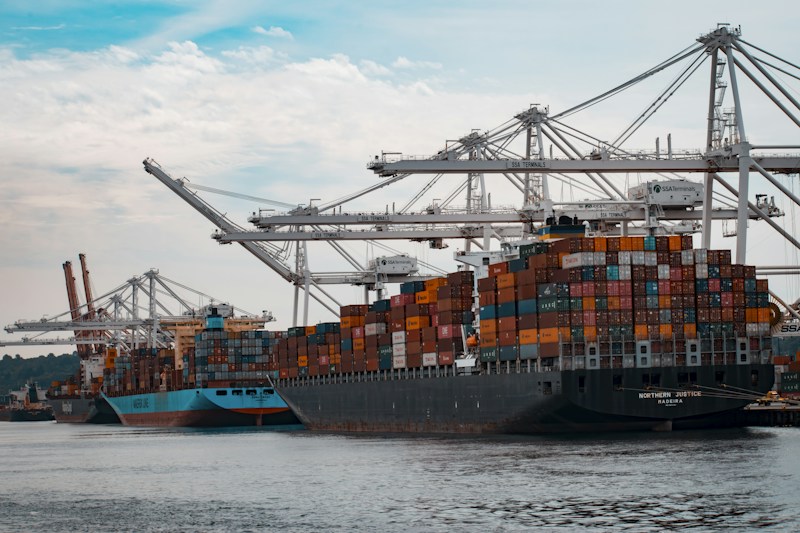
Aframax Tankers
The Aframax is the workhorse of the trans-Atlantic crude oil trade. At 80,000–120,000 DWT, these tankers carry between 500,000 and 800,000 barrels of crude oil per voyage. AllTrans Terminals' deep-water berths at Port Houston are fully equipped to receive Aframax-class vessels, with mooring arrangements certified for up to 120,000 DWT and loading arms matched to standard Aframax manifold configurations. These vessels typically serve routes connecting the Gulf Coast to Northwestern European refineries, the Mediterranean, and Latin American export destinations.
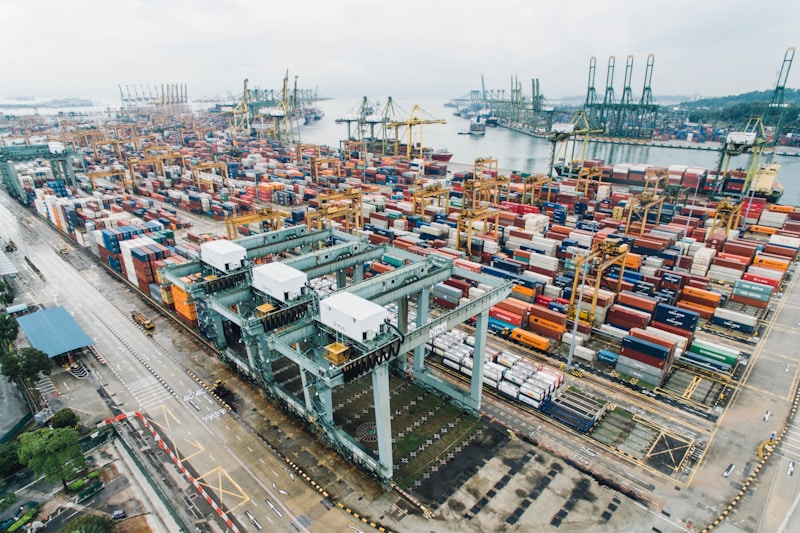
Product Tankers (MR / LR1 / LR2)
Medium Range (MR), Long Range 1 (LR1), and Long Range 2 (LR2) product tankers are the primary vessels serving the global clean petroleum products trade — carrying gasoline, diesel, jet fuel, naphtha, and chemical feedstocks between refineries, blending terminals, and distribution hubs worldwide. AllTrans Terminals handles all three size classes, with dedicated multi-product loading arms capable of simultaneously loading or discharging multiple grades without risk of cross-contamination. The Port of Houston is among the world's most active MR/LR loading ports for refined product exports.

Coastal & Handysize Tankers
Coastal tankers and Handysize vessels (10,000–40,000 DWT) are the backbone of domestic U.S. waterborne petroleum distribution. Operating under the Jones Act framework, these vessels move refined products between Gulf Coast terminals and refinery supply points along the East Coast, Gulf Coast, and to Caribbean and Central American destinations. AllTrans Terminals' berths handle these smaller vessel classes with equal capability, supporting Jones Act trades as well as short-sea international shipments to Mexico, the Caribbean Basin, and Central America.



Vessel Scheduling
Dedicated marine schedulers coordinate berth windows, laycan management, and cargo availability to minimize NOR delays and demurrage claims for shipowners and charterers alike.
Pre-Arrival Vetting
All vessels are pre-screened against SIRE/CDI inspection records, P&I club directories, and flag state performance registers. Non-compliant vessels are refused berth allocation to protect cargo integrity and facility safety.
Marine Surveying
Our marine team coordinates independent inspectors from SGS, Intertek, and Bureau Veritas for opening/closing gauges, ullage surveys, temperature measurements, and cargo sampling at every vessel call.
Documentation
Complete marine documentation management: Bill of Lading issuance, Notice of Readiness, time statements, vessel experience factor (VEF) calculations, and Letter of Protest (LOP) handling for disputed events.
Iron Rails to
Gulf Waters.
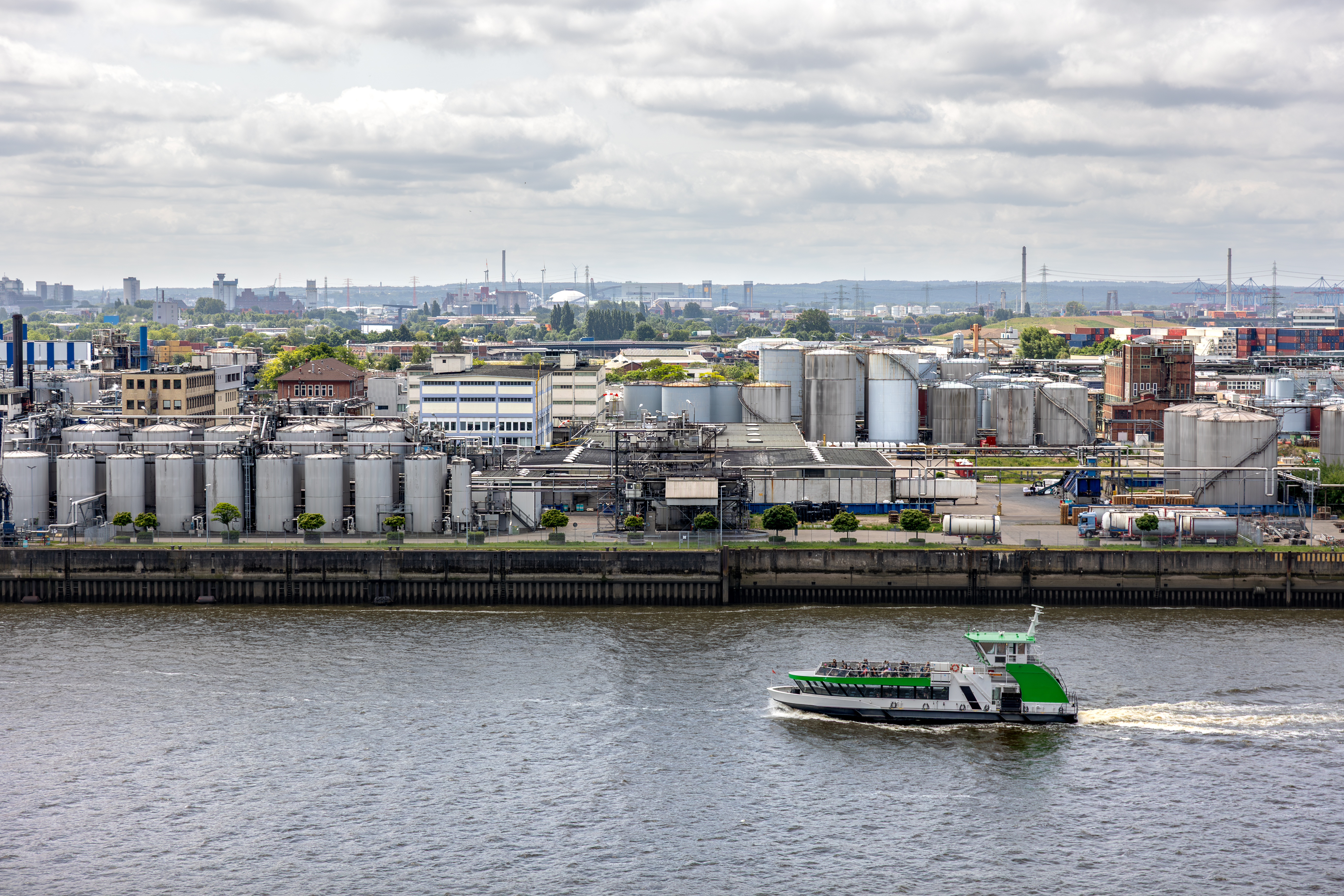
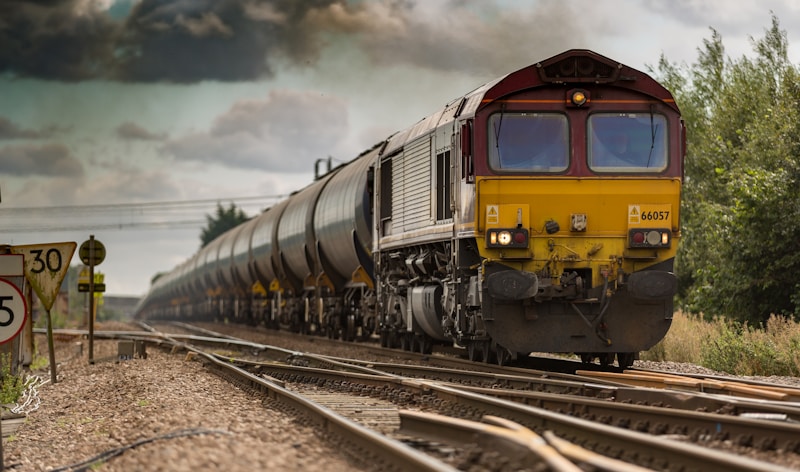
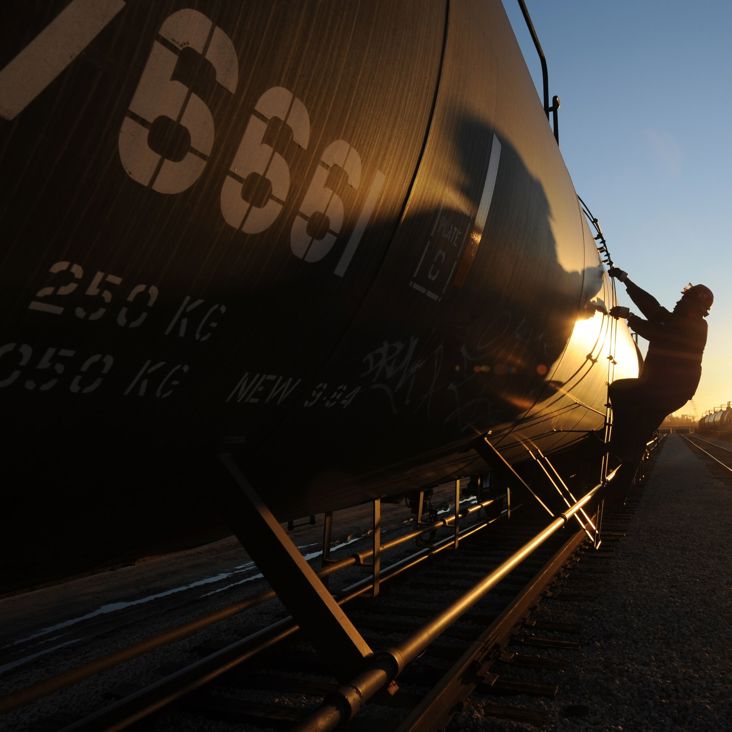
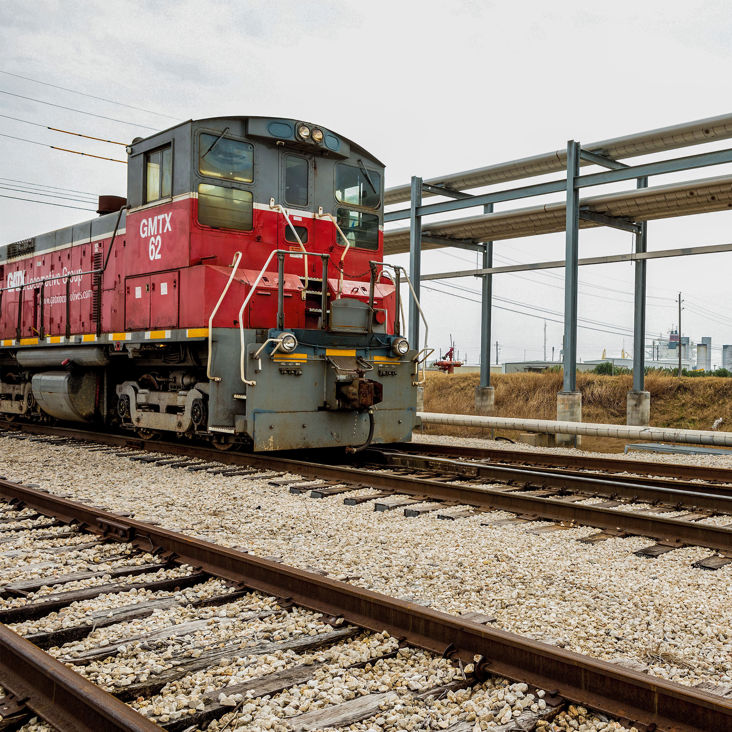
Rail connectivity transforms AllTrans Terminals from a coastal shipping point into a truly national logistics hub. Our on-site rail spur connections and tank car transloading capabilities enable bulk liquid products originating from inland refineries, chemical plants, and shale production regions — anywhere in North America with rail access — to be efficiently transloaded into marine export cargo at our Port Houston facility.
This rail-to-marine transloading capability is particularly significant for the U.S. shale oil and renewable fuel markets, where production sites are often located far from coastal export terminals. AllTrans Terminals' rail infrastructure provides a critical link in the supply chain between landlocked production and the global marketplace, giving producers access to premium international prices that domestic-only distribution channels cannot achieve.

Nation-Wide Origin.
Gulf Coast Delivery.
Tank Car Transloading
Our transloading facility is configured to receive and offload DOT-111 and DOT-117 specification tank cars — the standard configurations used for crude oil, ethanol, biofuels, and chemical feedstock movements across the North American rail network. Transloading operations transfer product from tank car to storage tank for subsequent marine export or pipeline injection.
- Bottom-unloading and top-unloading configurations
- API-certified metering on all transload lines
- SCADA-monitored flow and tank level during transfer
- Emergency vapor recovery during offload operations
Railroad Connectivity
AllTrans Terminals maintains rail spur connections serviced by Class I railroad operators with reach across the entire North American rail network. This connectivity provides access to crude oil originating in the Bakken, Permian Basin, DJ Basin, and Canadian oil sands — as well as ethanol produced in the Corn Belt Midwest and renewable fuels from Pacific Northwest and Gulf Coast refineries.
- CN, UP, and BNSF interchange connectivity
- Access to all major North American shale plays
- Ethanol corridor — Midwest grain belt origination
- Canadian crude and condensate via CN network
Rail-to-Marine Export
The highest-value application of AllTrans Terminals' rail infrastructure is enabling landlocked production to reach premium international export markets. Shale crude, renewable diesel, sustainable aviation fuel (SAF) feedstocks, and agricultural-origin biofuels can all be transloaded from rail and accumulated in our tanks before being loaded aboard an ocean tanker for delivery to international buyers at prices that reflect global rather than domestic market levels.
- Crude oil accumulation for Aframax marine export
- Renewable fuel rail receipt for international export
- SAF feedstock staging for vessel loading programs
- Full RFS RIN tracking for biofuel transfers
Our Shipping Corridors
Span the Globe
The Port of Houston is not merely a domestic logistics hub — it is one of the world's most connected petroleum trading points, with established shipping lanes serving every major refinery and petrochemical center across five continents. AllTrans Terminals' customer base includes major international commodity traders, integrated oil companies, and national oil companies whose trading activities span every region below.

Northwestern Europe
The trans-Atlantic clean products trade is one of the most active shipping corridors from Port Houston. U.S. Gulf Coast gasoline, diesel, and naphtha exports regularly supply refinery deficits in the ARA hub (Amsterdam-Rotterdam-Antwerp) and the UK. AllTrans Terminals handles both MR-size product tankers and larger LR-class vessels serving European destination ports across the Netherlands, Belgium, Germany, France, and the United Kingdom.

Latin America & Caribbean
The U.S. Gulf Coast is the primary refined products supplier to Mexico, Central America, and the Caribbean Basin. AllTrans Terminals handles coastal tanker and MR-class vessel movements serving PEMEX import terminals in Mexico, RECOPE in Costa Rica, and national fuel distributors across the Caribbean. Proximity to these markets makes Port Houston the natural routing point for time-sensitive product delivery to energy-importing nations that depend on U.S. Gulf Coast supply.

Asia Pacific
The rapid growth of U.S. crude oil exports has made Asia Pacific — particularly South Korea, Japan, Taiwan, India, and China — a major destination for Aframax and VLCC-size cargoes originating from the Gulf Coast. AllTrans Terminals supports the lightering and accumulation operations required to build full VLCC-size export cargoes from individual Aframax parcels, enabling our customers to achieve the economics of very large crude carrier (VLCC) economies on their Asian export programs.

West Africa & Mediterranean
West African and Mediterranean markets represent some of the fastest-growing demand zones for U.S. refined product exports. Nigeria, Ghana, Ivory Coast, Senegal, and Morocco import substantial volumes of gasoline, diesel, and jet fuel from the U.S. Gulf Coast — frequently on MR-class tankers loading at Port Houston. AllTrans Terminals supports West African and Mediterranean destination trades with flexible loading windows and rapid berth turnaround to meet the tight vessel schedules that characterize these markets.

Domestic U.S. Distribution
AllTrans Terminals is a critical node in the domestic U.S. petroleum distribution system. Products received at our terminals by vessel, barge, pipeline, or rail are redistributed throughout the Gulf Coast region and beyond via our truck loading rack, pipeline injections, and barge dispatch. This domestic distribution function makes AllTrans Terminals a hub rather than simply a pass-through terminal — adding value to every barrel that flows through our facilities.

Emerging & New Markets
The global energy transition is reshaping trade flows, and AllTrans Terminals is positioned to serve emerging demand centers for renewable fuels and low-carbon energy products. Our infrastructure investments in biofuel-compatible storage and SAF-capable tank systems enable us to support the growing export trade in renewable diesel, biodiesel, sustainable aviation fuel, and renewable naphtha to destinations across Europe, Asia, and Latin America where clean fuel mandates are driving demand.

How We Manage Every Vessel Call
AllTrans Terminals' marine operations team follows a rigorous pre-arrival, in-port, and departure protocol for every vessel call. This disciplined approach ensures product integrity, minimizes NOR delay risk, protects both shipowner and cargo owner interests, and maintains the safe, USCG-compliant environment our facility is known for.
Pre-Arrival Coordination
Preparation begins 72 hours before vessel arrival with a systematic sequence of activities designed to ensure the vessel, berth, product, and documentation are all ready when the ship arrives at the SBM or dock.
- ETA monitoring via AIS and agent communication
- SIRE/CDI vessel vetting record review
- Tank line-up confirmation and pre-transfer inspection
- Berth allocation and tug arrangement
- Port authority notice filing and customs pre-clearance
- Shore tank opening gauges and sampling
In-Port Operations
Once moored, a structured transfer operation is conducted under the joint supervision of AllTrans marine officers, the ship's chief officer, and an independent marine surveyor — ensuring every barrel is accounted for and safely transferred.
- Ship/Shore Safety Checklist completion (ISGOTT)
- Notice of Readiness (NOR) tendering and acceptance
- Pre-transfer conference — rates, communication, shutdown signals
- Continuous VHF radio watch during transfer
- Hourly trim, list, and temperature monitoring
- Running gauge and temperature during transfer operation
Departure & Documentation
Upon transfer completion, AllTrans Terminals ensures all post-transfer documentation is compiled and issued promptly — typically within 2 hours of hose disconnection — enabling the vessel to sail on schedule without documentation delays.
- Closing gauges and sampling — vessel and shore
- Bill of Lading quantity calculation (VEF applied)
- Time Statement and Laytime calculation
- Certificate of Quality (COQ) from laboratory
- Customs export documentation and clearance
- Departure inspection and cargo seal documentation

Safety at Every
Berth. Every Call.
Every Time.
Marine shipping involves inherently complex safety challenges — flammable products, confined spaces, large-scale equipment, and the interface between shore personnel and vessel crews from every flag state on earth. AllTrans Terminals has built a marine safety culture that addresses every one of these challenges with systematic, non-negotiable procedures grounded in ISGOTT, USCG, and MARPOL requirements.
Our marine safety record — zero serious marine incidents in over 20 years of terminal operations — reflects the depth of that commitment. Every member of our marine team holds TWIC credentials, is trained in hazmat emergency response, and participates in annual fire and oil spill response drills. Our oil spill response equipment is pre-staged at every berth and maintained in a state of immediate readiness, 24 hours a day, 365 days a year.
From First Inquiry
to Final Departure

Our streamlined shipping workflow ensures that from the moment you make first contact with our commercial team to the moment your vessel clears the harbor, every step is managed professionally, documented thoroughly, and communicated transparently. Here's how a typical ocean tanker call flows through AllTrans Terminals:
Commercial Inquiry & Nomination
Contact our commercial or marine operations team with cargo details, vessel name or TBN, laycan window, and loading/discharge requirements. We confirm berth availability and issue a pro-forma agreement within 24 hours.
Vessel Vetting & Pre-Approval
Our marine team reviews the nominated vessel's SIRE/CDI records, P&I club standing, and flag state credentials. Pre-approval or vetting conditions issued typically within 8 business hours of nomination receipt.
Pre-Arrival Coordination (72hrs)
Tank line-up confirmed, tug pre-arranged, port authority notice filed, customs pre-clearance initiated, shore tank opening gauges taken and shared with independent inspector and cargo owner.
Vessel Arrival & NOR Tendering
Vessel arrives at anchorage or SBM. Pilot boards, vessel proceeds to berth under tug escort. Mooring completed, gangway rigged, ISGOTT Ship/Shore Safety Checklist completed before cargo transfer begins.
Cargo Transfer Operations
Loading or discharge conducted per agreed transfer plan. SCADA monitors flow rate, shore tank levels, and vapor recovery continuously. Marine surveyor witnesses and records all measurements throughout the transfer operation.
Documentation & Vessel Departure
Bill of Lading issued, Certificate of Quality received from lab, Time Statement and Laytime calculation provided, Customs export clearance obtained. Vessel unmoored and departed — full document set issued within 2 hours.
Shipping in Motion —
Our Operations in Pictures
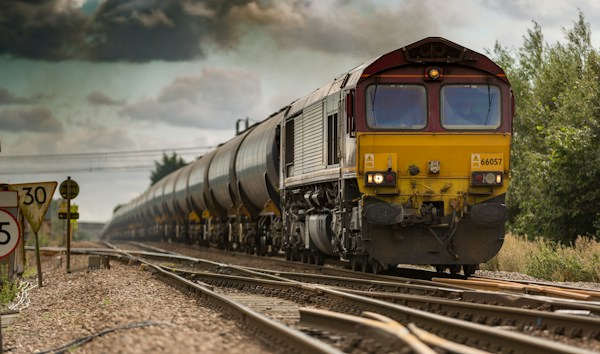
From ocean-going tankers navigating the Houston Ship Channel to tank cars unloading on our rail spur at sunrise, the images below capture the scale, precision, and human expertise that define AllTrans Terminals' shipping operations every single day. Click any image to view full size.



Ready to Ship
With AllTrans?
Contact our marine operations team to discuss berth availability, vessel suitability, barge scheduling, or rail transloading requirements.